History

1991-2000: A new beginning

1991-2000: A new beginning

Leeds were again signing the big name stars and in June 1990 they captured All Black John Gallagher, rated as the finest Rugby Union full-back in world, but he didn't live up to his expectations and drifted out of the game after several seasons.

At the end of the 1990-91 season David Ward was replaced by Doug Laughton who was rated as one of the best coaches of the modern era, having just guided Widnes to back-to-back League and Premiership titles, so Leeds felt they had the man to re-ignite the flame of success.

He began recruiting the best players, which included the signing of Great Britain captain, Ellery Hanley, completely rebuilding the side and relinquishing the services of the old guard under David Ward.

He also set about creating the finest youth policy in the country which the club had passed by since the 1960s and 70s. One thing Laughton never achieved at Leeds was a major trophy, despite reaching four major finals in his four-year spell at Headingley, which included two successive Challenge Cup finals against Wigan in 1994 and 1995. Laughton shocked the Rugby League world - and Leeds - by resigning at the end of the 1994-95 season.

In the pursuit of Wigan, Leeds had over-stretched their resources and when Dean Bell was brought in to replace Laughton, the club was at it's lowest point since the founding of the club. This change in management also signalled the start of a new era for rugby league, not just for Leeds, but for the whole game in this country. The decision was taken to evolve from a hundreds years of winter rugby and to make rugby league a summer sport. The new competition would have full time professionals at every top-flight club and would marketed itself as the game for all the family at the turn of the millennium.

The first Super League season was an arduous one for Bell and his squad. Stretched by injuries and an inexperienced squad, Leeds struggled in the Super League I. The team narrowly avoided relegation and Leeds CF & A Ltd were endanger of going out of business. In November 1996, the company was bought by Paul Caddick along with the founder of Sheffield Eagles, Gary Hetherington, who was installed as Chief Executive.

A new work ethos was installed at the club and the determination to turn the years of frustration into success. As part of that Leeds paid a world record fee for Wales captain Iestyn Harris from Warrington in April 1997. Harris was the heart of the new Leeds team and he would secure his own place in the club's history during his time at the club.

Super League II saw the newly named Rhinos reach the Challenge Cup semi final and they were the closest challengers to Bradford for the title. In that season, they also took part in the World Club Championship with home and away fixtures against the Adelaide Rams and the North Queensland Cowboys.

Dean Bell subsequently took up a role as Head of Youth Development and he was replaced by Australian Graham Murray as Head Coach. Murray became the catalyst for a new regime at Headingley and inspired his charges to the Inaugural Grand Final at Old Trafford.

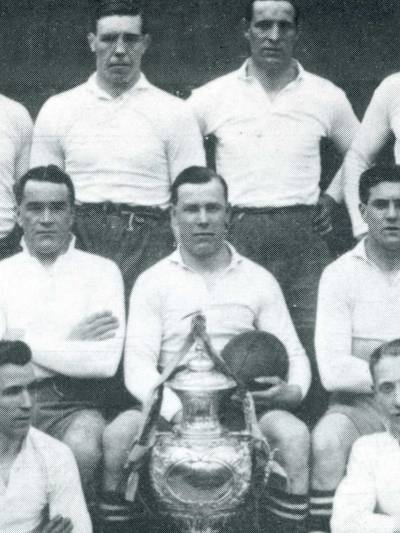
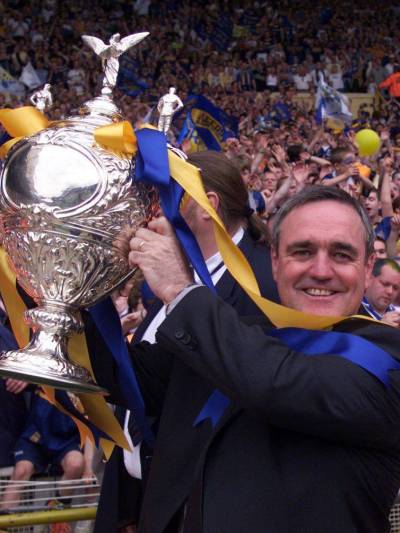
But 1998 was to be just a taster of what was to come. 1999 saw a return to Wembley for the final Final at the famous stadium. Leeds beat Wigan, St Helens, Widnes and Bradford on their way to the Final where they met London Broncos. The game started badly for Leeds going 10-0 down, before the Rhinos ran riot. Flying winger Leroy Rivett re-wrote the record books scoring four tries in a 52-16 win. The team that day was: Harris, Rivett, Blackmore, Godden, Cummins, Powell, Sheridan, Fleary, Newton, McDermott, Morley, Farrell, Glanville. Subs: Jackson, Mathiou, Hay, St Hilaire.

At the end of the season Murray returned to Australia and was replaced by his compatriot Dean Lance. In his first season Leeds reached the Challenge Cup Final and recorded a 13 game winning run during the season. However, a poor run of results at the start of the 2001 season saw Lance leave the club and former player Daryl Powell was appointed First Team Coach.

History

Your one-stop shop to the history of this proud Rugby League Club

Headingley Carnegie

Your guide Headingley Carnegie Stadium, the home of Leeds Rhinos
Latest News
© 2010 © 2009 Leeds Rhinos, Statistical Data © SFMS Ltd Legal notice delivered by Sotic powered by RedDot Web Content Management